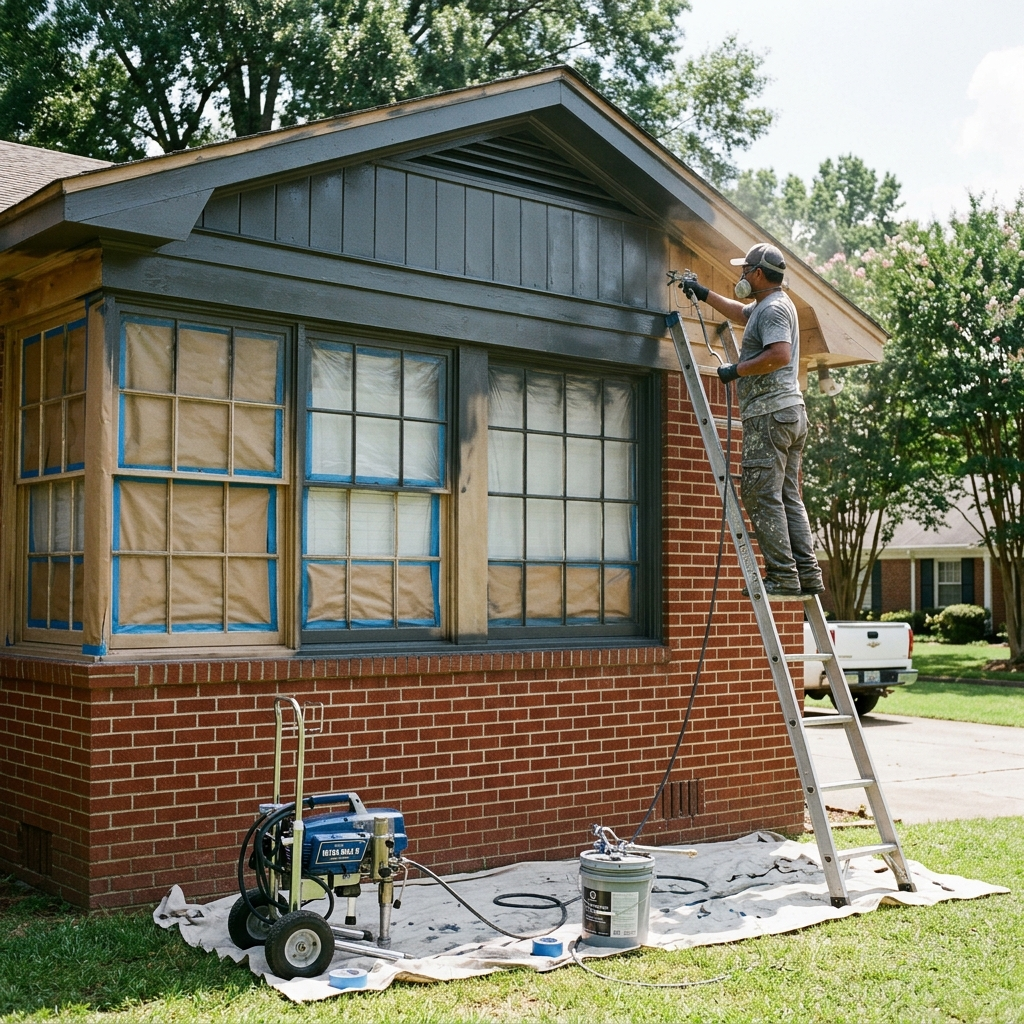
Your home's exterior faces heat, moisture, wind, and UV exposure year after year. When the paint system protecting it begins to fail, the underlying wood, trim, and siding become vulnerable to damage that goes beyond appearance. A well-executed exterior paint job does more than refresh a color, it forms a barrier that slows moisture intrusion, wood rot, and surface deterioration.
At Pro Painters Carpentry Plus, we approach exterior painting as a protective process, not just a cosmetic one. Our team prepares, repairs, and coats exterior surfaces in a way that supports long-term performance, not just a fresh coat that looks good for a season. Timing your exterior paint job right plays a real role in how long it holds up.
Paint applied over a compromised surface will not hold. This is one of the most common reasons exterior paint fails prematurely, not because of the paint itself, but because the surface beneath it was not ready. Preparation removes the conditions that cause paint to peel, bubble, or crack: loose and failing paint, surface contamination, bare wood, cracks, and moisture-related damage, all addressed before any coating goes on.
Skipping or shortening this step transfers the problem forward. The paint may look acceptable at first, but it is unlikely to perform well over time. Our team dedicates significant time to surface preparation on every exterior project, we clean, scrape, sand, prime, and assess the substrate before recommending a coating approach. This is where most of the protective work happens, and it is where we focus our attention. It is also why a DIY exterior repaint carries more risk than it looks like upfront, skipped prep is rarely visible on day one.
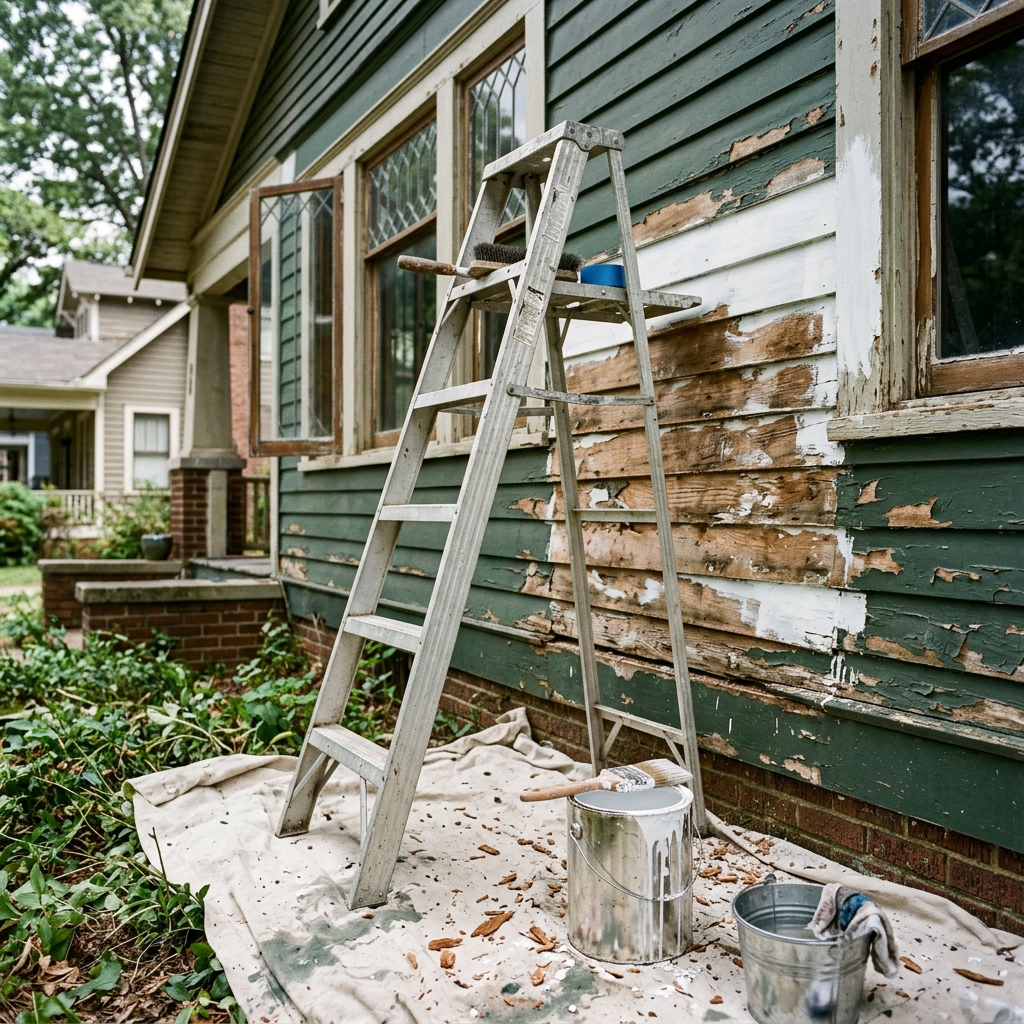
Exterior surfaces are not uniform. Wood siding, trim, fascia, soffit, masonry, stucco, and composite materials each absorb coatings differently and have different failure patterns. Wood siding's real lifespan often comes down to what's happening underneath the paint, not the paint itself. A preparation and coating approach that works well on one surface may not translate to another, so our team evaluates each surface individually and explains what preparation it needs before recommending a coating approach.
Tends to absorb moisture and is vulnerable to rot if bare or cracked areas are left unaddressed. Proper priming of exposed wood is an important step before topcoating.
Hardie board and similar materials are more dimensionally stable than wood but still need correct surface prep and manufacturer-compatible coatings to perform as intended.
Often overlooked, but these take on significant moisture exposure, particularly in areas with heavy rainfall or humidity. We assess them carefully before coating.
May need specific primers and elastomeric or masonry-compatible coatings depending on condition and exposure. Cracks and voids get addressed before painting.
Exterior coatings differ in composition, durability, sheen level, and suitability for different substrates and climates. Selecting the right product for the right surface supports the longevity of the finish and reduces the likelihood of early failure. We discuss product and finish options with you before work begins and explain the reasoning behind our recommendations.
Widely used for exterior applications. They remain flexible as temperatures shift, resist moisture reasonably well, and clean up with water.
Offer stronger adhesion and moisture resistance than standard latex blends, often the better call for surfaces facing heavy sun or moisture in the mid-South climate.
Matters as much as the topcoat. Bare wood, previously painted surfaces, stained areas, and masonry may each need a different primer.
Flat and matte hide imperfections but are less washable. Satin and semi-gloss are more common on trim, doors, and high-contact areas.
Exterior painting projects frequently uncover conditions that require repair before a coating can be applied correctly. Rotted wood, damaged trim, cracked caulk, failing joints, and deteriorated siding are common findings, particularly on homes that have not been painted in several years. Painting over these conditions without addressing them first is unlikely to produce a durable result, moisture will continue to move through compromised areas regardless of what is applied on top.
We perform carpentry repairs as part of our exterior painting work, including replacing rotted or damaged trim boards, repairing Hardie board, and addressing wood deterioration at fascia, soffit, windows, and door frames through our rotten wood repair team. We identify these issues during prep, communicate what we find, and discuss repair options with you before proceeding, rather than working around conditions that will reduce the life of the paint job.
Memphis heat, humidity, and seasonal moisture place real demands on exterior coatings. Paint systems that are correctly prepared, primed, and applied hold up well under these conditions. Those that are not tend to show failure, peeling, cracking, fading, or moisture intrusion, within a few years, and the early warning signs are worth knowing before they turn into a bigger repair. See how humidity affects paint for a closer look at why.
Our team works carefully at each stage of an exterior project: assessing the surface, completing necessary repairs, preparing the substrate, applying the correct primer and topcoat, and cleaning up the work area before we leave. We communicate with you throughout the project and give you an honest picture of what we find and what we recommend.
Exterior painting is priced by the square foot of paintable wall area, factoring in surface condition, prep, product, and any repairs needed. Here is what that typically looks like for a Memphis area home.
| What | Typical price range |
|---|---|
| Per square foot (paintable area) | $1.50 – $4.00 |
| Average whole house project (2,000 sq ft) | $3,000 – $8,000 |
| Brick or stucco homes | 25–40% above vinyl siding pricing |
| Exterior trim, painted separately | $1 – $4 per linear foot |
If you're comparing estimates, ask what preparation work each one actually includes, that's usually where they differ most, and it has the greatest effect on how the finished work holds up.
Request a free exterior painting estimateA predictable, weather-aware sequence from first wash to final topcoat.
The surface is washed to remove dirt, chalking, and mildew, often booked as its own pressure washing visit a few days ahead of the paint crew.
Loose or peeling paint is scraped and sanded back to a sound, stable edge so the new coat has something solid to grip.
Any soft or rotten wood found during prep is repaired or replaced before painting continues.
Gaps around trim and windows are caulked, and bare or patched areas get spot primed.
Two coats go on, giving even color and a finish that holds up to Memphis weather.
Answer a few quick questions about your exterior painting project. No pricing guesses, just a clear scope our team can review before we ever step on site.
Our local team will review your specs and reach out shortly to schedule your zero-deposit on-site estimate. In a hurry? Call (901) 584-6090.
If your question is not answered here, give us a call. We are happy to talk through anything before you commit.
Many Germantown HOAs require exterior color approval. We work within the guidelines and tackle chalked older paint properly.
Durable, weather-rated systems for Collierville exteriors where curb appeal and resale value both matter.
Cordova's Wolf River humidity drives mildew on shaded walls. We wash, treat, and coat so the finish lasts.
Brick and wood-siding exteriors in Bartlett, repainted to hold up to the city's exterior-maintenance standards.
Exterior repaints for Olive Branch homes facing full southern sun. Licensed in TN, serving the MS border.
Long-trusted in Southaven for exterior repaints that stand up to Mississippi heat and humidity.
